- On average, black men are more athletic than white men.
- On average, white men are smarter than black men.
- Young black and/or Latino men are more likely to engage in criminal activity than others not meeting those three criteria.
- I don't care what your upbringing was like, if you engage in socially unacceptable behavior, you need to suffer the consequences.
- Prison should be hard work... with no healthcare.
- I'd bring back firing squads.
- Selective abortion is murder of the most innocent individuals by those whom he/she should be able trust most.
- Inasmuch as it's no more socially harmful than alcohol, marijuana should be legalized, subject to similar restrictions as alcohol, and have the piss taxed out of it.
- There's a special corner of Hell waiting for investment bankers.
- In our society, capital gains are often used as a sole source of income, and thus, should be taxed as income.
- "An armed society is a polite society. Manners are good when one may have to back up his acts with his life." -Robert A. Heinlein
- People are just not really designed to be functional past 50. A mandatory retirement age of 50 should be set and the privileges of healthcare (minus morphine injections) and driving would be revoked at age 70. At that point, in the words of Auric Goldfinger, "I expect you to die."
- I'd give illegal immigrants 2 options: 1) Leave. 2) Die.
- Two words: English Only.
- Build the wall... put machine gunners on the top.
- While we're at it, put a mile-long minefield just north of the Mexican border... that would be entertaining if nothing else.
- The high population densities would make China really easy to nuke, should that be necessary.
- Anyone who takes a camera into a war zone should be shot on site.
- I'd support a "separate but equal" initiative that would extend similar privileges to gay couples as straight couples, but call it something that didn't have the word "marriage" in the name.
- We have two options to maintain healthy forests: 1) Log. 2) Let forest fires burn, unrestrained. Personally, I like my wood products.
- Labor unions, while serving a useful purpose, have become too powerful.
- I like a couple of Nickelback songs.
- Capitalism is not a universally extollable virtue.
- Nuclear power is great in aseismic areas, assuming all precautionary procedures are followed.
- Ohio and Florida both really suck.
- If the Eastern Seaboard was cut off and allowed to float out to sea, it would make the United States of America a better place. (Yes, I realize that this is not scientifically feasible.)
- "The only way to redeem the south is to burn it up and baptize for the dead." -J. Golden Kimball
- I miss natural selection.
- Speaking of which, I don't think creation and evolution are mutually exclusive.
- I think FDR was the best president.
Showing posts with label The United States of America. Show all posts
Showing posts with label The United States of America. Show all posts
Monday, November 26, 2012
Inconvenient Truths
I've decided that I never want to run for political office. In order to give myself proper incentive to this end, I've decided to post of list of what I consider to be politically incorrect truths that would be a nightmare to clean up if I did run. All potentially quantitative claims will be unsubstantiated inasmuch as I believe the data associated with such statistics to be unilaterally biased, one way or another. Enjoy.

Friday, November 16, 2012
On Capitalism
It's been a while since I've posted anything philosophical on my blag and my homework that was due tomorrow is now due next Wednesday, so I have a little free time to blag.
I'll be speaking on these issues as an American, but many of the ideas that I present will be applicable to all of western society.
Let me start off this post by saying that I'm a registered Republican and I voted for Mitt Romney (somewhat begrudgingly). I'm an almost universal social conservative, being pro-life, pro-gun, pro-religion, pro-self sufficiency, pro-drilling, pro-fracking, and pro-logging. I'm aligned with the conservative base of the Republican party on basically every issue... except one. Unfortunately, that one issue is the hottest topic in the entire political sphere of western society.
Many of my super-conservative friends seem to extol capitalism as if it's a universal virtue sent by revelation from Heaven for the benefit of mankind. In reality, capitalism is an extreme on the opposite side of the economic system spectrum from socialism. Either one, in pure form, is just as likely to collapse in on itself and to leave society in ruin. Many pundits on both sides of the aisle would have you believe that these two ideals are mutually exclusive, when in reality, any functional society requires balanced elements of both self service (capitalism) and social service (socialism).
Any blue-blooded American who's not a clove-smoking hippie can tell you why pure socialism, aka communism, doesn't work. Under this sort of system, all people work for the benefit of the whole and resources are distributed as evenly as possible. Any individual's prosperity is not based on how hard or how effectively that one person works, but on how well people work around him or her. Under a purely socialist system, it's easy to give a minimal effort and receive a similar reward, because everyone around you can pick up your slack. However, when too many people do this, the system collapses because nothing actually gets done. Communism is the liberal extreme of the economic system spectrum and does not provide sufficient individual incentive to be sustainable.
In contrast, many Americans seem to have difficultly identifying why pure capitalism doesn't work, even though the answer should be more obvious to an objective observer (if such a person exists). Part of this phenomenon is probably due to the fact that essentially pure socialist economies have existed for relatively short periods of time. Nazi Germany, Soviet Russia, and Red China (until more recently) are all good examples of societies that existed for a time with more or less socialist economies and eventually collapsed or, in the case of China, transitioned to a sort of pseudo-capitalism. On the other hand, a purely capitalist society has either never existed or didn't last long enough to create any lasting records. There are basically two reasons why. One should be obvious, though people seem to have a hard time grasping it, and the other is more subtle.
First, I have two words for you: Market Failures. A purely capitalist economy is incapable of providing certain public goods that are essential for a healthy, functional society. Two excellent examples of market failures of public goods are the military and civil infrastructure. There are several others both in and out of the realm of public goods, but these two are among the best simple examples. These public goods can only be provided by a socialist system. Many conservatives would balk at the idea that the military is a socialist program, but these folks haven't really thought about it. For this program, the government is taking a little bit of wealth from everyone in order to preserve the nation as a whole. The military is certainly not the most socialist system set up by the federal government, but it's along the same lines. As far as public infrastructure goes, I'll let POTUS speak for himself. Mitt Romney's heyday of taking this quote out of context made it slightly painful to vote for him.
If a society has a system that provides for these essential public goods, it is not a purely capitalist society. These things can only be provided by a system that is inherently socialist in that it takes some proportion of the wealth from the populace in order to provide for the general welfare. If a society does not have these public goods, there is a very high probability that it will soon collapse and be replaced by a society that does.
Now that we've covered what should be obvious, let's move on to the more subtle. I've said for a few years now that an economist is also a political philosopher, even if he/she is a really bad political philosopher. The ideas and analyses of wealth and trade cannot be totally divorced from those of power. Not only does material wealth, in and of itself, bring power with it, those who are powerful are also more capable of obtaining material wealth by virtue of their power. Free-market economics assumes that men would rather trade than steal. While this is often true, there are clearly those who are willing to break to rules for the sake of wealth and increased power.
Any society that doesn't, at least somewhat, regulate the exertions of the powerful upon the weak, will eventually fail. Power held by individuals and small groups leads to isolation of those individuals and groups from the rest of the populace. Essentially, the very few ruling elite sit in a gated inclosure atop a hill and manage the numerous lower classes remotely. A society in this state is volatile and there are many ways in which it can fail. One way is that the powerful do not allocate enough of their wealth for public goods, resulting in a market failure, as previously mentioned. Another is the small groups of the powerful spending resources to fight against each other, attempting to shrink the others' wealth and power, until the society collapses by attrition (see next paragraph). There's also my personal favorite, which is united rebellion by the weak against the powerful. Though few individuals may hold large quantities of power, a large majority is almost always more powerful in aggregate. This rebellion can manifest itself as a peaceful refusal to work for the powerful, at some personal risk, or blood can flow down the streets of Paris (figuratively speaking:). Regardless of the precise circumstances, a society that does not prevent the powerful from becoming too powerful will fall eventually.
It's been asked before how deregulation of economic players can possibly lead the economy to shrink. I have another word for you: Rent-seeking. Economic regulation is only universally bad if it's assumed that all participants in a capitalist economy are acting to grow their wealth in absolute terms and not merely relative to the wealth of others. Rent-seeking is essentially using one's wealth and power to gain a larger proportion of the existing wealth, rather than creating new wealth. Left unchecked, rent-seekers will almost universally shrink the total wealth available and cause a society to decline. A purely capitalist society has no checks for the power plays of rent-seekers that can lead to economic and societal decline and collapse.
I said at the beginning of this post that both pure capitalism and pure socialism are extremes in the spectrum of economic systems and neither can exist in a functional society, at least not for very long. As such, there is a need for balance between elements of both self service and social service. For the political problems faced in much of the western world, I like the application of the far eastern philosophy of Yin and Yang. For the description of this philosophy, I give mad props to whoever wrote the opening line of the Wikipedia article I just linked above. It's pure gold. "In Chinese philosophy, the concept of Yin-Yang, literally meaning 'shadow and light,' is used to describe how polar opposites or seemingly contrary forces are interconnected and interdependent in the natural world, and how they give rise to each other in turn in relation to each other." Capitalism and socialism are polar opposite and seemingly contrary ideas that necessarily have to be applied in tandem in order to maintain a healthy and functional society. Without essential elements of both schools of thought, a society will collapse sooner, rather than later.
 You can consider capitalism to be light and socialism to be darkness, if that helps you. It really doesn't matter.
I'll be speaking on these issues as an American, but many of the ideas that I present will be applicable to all of western society.
Let me start off this post by saying that I'm a registered Republican and I voted for Mitt Romney (somewhat begrudgingly). I'm an almost universal social conservative, being pro-life, pro-gun, pro-religion, pro-self sufficiency, pro-drilling, pro-fracking, and pro-logging. I'm aligned with the conservative base of the Republican party on basically every issue... except one. Unfortunately, that one issue is the hottest topic in the entire political sphere of western society.
Many of my super-conservative friends seem to extol capitalism as if it's a universal virtue sent by revelation from Heaven for the benefit of mankind. In reality, capitalism is an extreme on the opposite side of the economic system spectrum from socialism. Either one, in pure form, is just as likely to collapse in on itself and to leave society in ruin. Many pundits on both sides of the aisle would have you believe that these two ideals are mutually exclusive, when in reality, any functional society requires balanced elements of both self service (capitalism) and social service (socialism).
Any blue-blooded American who's not a clove-smoking hippie can tell you why pure socialism, aka communism, doesn't work. Under this sort of system, all people work for the benefit of the whole and resources are distributed as evenly as possible. Any individual's prosperity is not based on how hard or how effectively that one person works, but on how well people work around him or her. Under a purely socialist system, it's easy to give a minimal effort and receive a similar reward, because everyone around you can pick up your slack. However, when too many people do this, the system collapses because nothing actually gets done. Communism is the liberal extreme of the economic system spectrum and does not provide sufficient individual incentive to be sustainable.
In contrast, many Americans seem to have difficultly identifying why pure capitalism doesn't work, even though the answer should be more obvious to an objective observer (if such a person exists). Part of this phenomenon is probably due to the fact that essentially pure socialist economies have existed for relatively short periods of time. Nazi Germany, Soviet Russia, and Red China (until more recently) are all good examples of societies that existed for a time with more or less socialist economies and eventually collapsed or, in the case of China, transitioned to a sort of pseudo-capitalism. On the other hand, a purely capitalist society has either never existed or didn't last long enough to create any lasting records. There are basically two reasons why. One should be obvious, though people seem to have a hard time grasping it, and the other is more subtle.
First, I have two words for you: Market Failures. A purely capitalist economy is incapable of providing certain public goods that are essential for a healthy, functional society. Two excellent examples of market failures of public goods are the military and civil infrastructure. There are several others both in and out of the realm of public goods, but these two are among the best simple examples. These public goods can only be provided by a socialist system. Many conservatives would balk at the idea that the military is a socialist program, but these folks haven't really thought about it. For this program, the government is taking a little bit of wealth from everyone in order to preserve the nation as a whole. The military is certainly not the most socialist system set up by the federal government, but it's along the same lines. As far as public infrastructure goes, I'll let POTUS speak for himself. Mitt Romney's heyday of taking this quote out of context made it slightly painful to vote for him.
If a society has a system that provides for these essential public goods, it is not a purely capitalist society. These things can only be provided by a system that is inherently socialist in that it takes some proportion of the wealth from the populace in order to provide for the general welfare. If a society does not have these public goods, there is a very high probability that it will soon collapse and be replaced by a society that does.
Now that we've covered what should be obvious, let's move on to the more subtle. I've said for a few years now that an economist is also a political philosopher, even if he/she is a really bad political philosopher. The ideas and analyses of wealth and trade cannot be totally divorced from those of power. Not only does material wealth, in and of itself, bring power with it, those who are powerful are also more capable of obtaining material wealth by virtue of their power. Free-market economics assumes that men would rather trade than steal. While this is often true, there are clearly those who are willing to break to rules for the sake of wealth and increased power.
Any society that doesn't, at least somewhat, regulate the exertions of the powerful upon the weak, will eventually fail. Power held by individuals and small groups leads to isolation of those individuals and groups from the rest of the populace. Essentially, the very few ruling elite sit in a gated inclosure atop a hill and manage the numerous lower classes remotely. A society in this state is volatile and there are many ways in which it can fail. One way is that the powerful do not allocate enough of their wealth for public goods, resulting in a market failure, as previously mentioned. Another is the small groups of the powerful spending resources to fight against each other, attempting to shrink the others' wealth and power, until the society collapses by attrition (see next paragraph). There's also my personal favorite, which is united rebellion by the weak against the powerful. Though few individuals may hold large quantities of power, a large majority is almost always more powerful in aggregate. This rebellion can manifest itself as a peaceful refusal to work for the powerful, at some personal risk, or blood can flow down the streets of Paris (figuratively speaking:). Regardless of the precise circumstances, a society that does not prevent the powerful from becoming too powerful will fall eventually.
It's been asked before how deregulation of economic players can possibly lead the economy to shrink. I have another word for you: Rent-seeking. Economic regulation is only universally bad if it's assumed that all participants in a capitalist economy are acting to grow their wealth in absolute terms and not merely relative to the wealth of others. Rent-seeking is essentially using one's wealth and power to gain a larger proportion of the existing wealth, rather than creating new wealth. Left unchecked, rent-seekers will almost universally shrink the total wealth available and cause a society to decline. A purely capitalist society has no checks for the power plays of rent-seekers that can lead to economic and societal decline and collapse.
I said at the beginning of this post that both pure capitalism and pure socialism are extremes in the spectrum of economic systems and neither can exist in a functional society, at least not for very long. As such, there is a need for balance between elements of both self service and social service. For the political problems faced in much of the western world, I like the application of the far eastern philosophy of Yin and Yang. For the description of this philosophy, I give mad props to whoever wrote the opening line of the Wikipedia article I just linked above. It's pure gold. "In Chinese philosophy, the concept of Yin-Yang, literally meaning 'shadow and light,' is used to describe how polar opposites or seemingly contrary forces are interconnected and interdependent in the natural world, and how they give rise to each other in turn in relation to each other." Capitalism and socialism are polar opposite and seemingly contrary ideas that necessarily have to be applied in tandem in order to maintain a healthy and functional society. Without essential elements of both schools of thought, a society will collapse sooner, rather than later.

Friday, July 22, 2011
.edu
 In my blag post titled, "The Economic Recovery Plan," I talked briefly about property tax and education reform and promised that there would be a post dedicated to this topic in the near future. Well today's you're lucky day folks! I realize that my opinions on education may upset educators and progressive liberals of all sorts. However, I believe that, in order to right the US economy, we need to have some changes to our primary and secondary education system.
First of all, allow me to say that I do not advocate much in the way of cuts to the education system across the country. However, I do believe that there are some decisive changes that need to be made in order to make the system more efficient and get more value for the tax dollars spent.
Part of the cause of the housing crisis in the United States is that school districts funding is based largely on the value of the homes in the area. Higher home values means higher property taxes, which means more funding for local schools. Thus, educators and everyone close to the education system have been trying to push property values up. This, combined with I-bankers' casino-like gambling in the housing market, lead to a huge housing boom. Sadly, this sort of boom is always followed by a bust, which meant a sudden and dramatic drop in housing values and the associated property tax revenue.
Coming up with a solution to the property tax problem alone is a conundrum. Is there really any other parameter under which property taxes can be calculated and collected, or would property taxes have to be abandoned and their revenue replaced by hikes in other taxes? The best alternate system that I can think of is basing property taxes on the number of people inhabiting each acre of land with respect to the population density of the surrounding area with separate rates for areas deemed rural, suburban, and urban. However, in the end, I'm not sure that this would be better than just throwing out property taxes and raising income and sales taxes to compensate. I just couldn't tell you for sure.
Regardless of what method of taxation was used, the proportion of wealth taken in by the states cannot continue to increase with respect to income. For years, states have taken in billions more dollars to try to help fund public eduction while the nation's infrastructure rots to nothingness (said the civil engineer). I hate to be the bearer of bad news, but it doesn't matter how well kids know their multiplication tables when they're dying of Giardia or Cholera because the state chose more money for education over a drinking water treatment plant. While it's working out alright for now, the track we're on is just not sustainable.
So, without further ado, allow me to unveil my ideas for trimming the fat off education so that (maybe) we could have drinking water, sanitary sewer, and transportation systems that don't suck:
- Eliminate Bilingual Education Programs. Since I would have already deported the illegal immigrants, this wouldn't be as big of an issue as it might seem. Any child holding citizenship status and not speaking fluent English would be put into a rigorous English immersion program.
- Reduce the power of teachers' unions and certification boards. The goal of this change would not be to reduce the pay of teachers, who already take in the shorts monetarily. The goal would be to take down the institutions that keep bad teachers in the classroom. In order to create better value for taxpayers, we need to have the most capable teachers, and not just the oldest and most social powerful, in the classroom. Unions and cert. boards are made up, largely, of current teachers, who have their own interests in mind. A set of bad teachers can stay right where they are if they're also on the cert. board by keeping better teachers from becoming certified.
- Change the cert. requirements for teachers. To the chagrin of elementary education majors across the nation, I would remove the requirement of having a bachelor's degree in order to teach elementary and middle school. Before you tell me that that would only reduce the quality of teachers, let me present to you the brilliant, but impossible alternative. I've met a few people, among whom there were plenty of education majors, who graduated from reasonably good colleges still being dumber than a bag of hammers and not knowing the functional differences between there, their, and they're, nor being able to find the People's Republic of China on a map. What the American education system really needs is consistent testing of intelligence and communication skills for teachers. Now, we go on a detour as to why this little slice of reason will never happen. In the case of Griggs v. Duke Power Co., a group of black workers sued the power company for which they worked, for using intelligence tests to discriminate against minority workers. The supreme court ruled that, under the Civil Rights Act of 1964, companies could not institute any selection criteria, including intelligence testing, that would cause minorities to be less likely to win jobs. (If you don't find this a little ridiculous, you're part of the "Don't confuse me with the facts," problem we have in this country.) This ruling made it functionally illegal for any organization to use intelligence testing as a selection criteria for employment, including certification of teachers. Now just to be clear, I'm not trying to recruit the best and brightest to be teachers. This would be absurd, based on the current salaries of teachers. After all, those who can't do teach. I'm just trying to make sure that we don't keep morons as teachers just because they were the best we had 12 years ago.
- Remove competitive athletics from government budgets. I like sports as much as the next guy, but much like the Bowl Championship Series of Division I-A football, competitive sports are a large burden on our government-funded education system. All funding for competitive athletics would have to come from approved boosters. Left to its own devices, this system would unduly favor the children of rich parents, who are already over-privileged as it is. However, with this reform, I would also require that all booster contributions be pooled by the state and redistributed based on enrollment. This way, East High School (Denver) would get a similar athletic budget to Cherry Creek High and all other schools of similar size. If a rich family is going to buy new equipment for their son's football team, they're going to also have to buy new equipment for every other school in the state. Also, any program found not properly reporting its booster contributions to the state would have those contributions seized and would not be allowed to play for one full athletic season.
- Open up a can of whoop-@$$ on textbook publishers. Any undergraduate can tell you, "The price of textbooks is too D@mn high!" This would take the form of not only taking measures to reduce prices outright, but also to prevent publishers from coming out with frivolous new editions. Restrictions would be placed on how often publishers could come out with new books, and if there wasn't enough new, groundbreaking material in a new edition, publishers would be required to continue printing the old edition and selling it at the same price.
- Open up a slightly less intense can of whoop-@$$ on technology companies. In exchange for not having their taxes raised, makers of computers and software would have to supply a certain number of desktops, printers, tablets, etc. to states for use in public schools. Any proceeds collected from the potential tax hike on tech companies would be redistributed to the states for the purpose of funding education.
- Construct schools with a contractual design life. Many school districts are not held accountable for how they use their school buildings and when they replace them. Districts would have to commit to how long they would use a school building. The longer the design life of the building, the more money the district would get from the state in order to build it. The only way that a district could sell a school building short of its legal design life is if the costs of repairing the building, in absolute terms, would be greater than the cost of a new building.
Unfortunately, the reforms I list in this post are almost as unrealistic as the one that I suggested in the last post, most of them for similar reasons. I can only hope that the feds and states of United States of America can make some priorities that actually contribute to the welfare of its citizens, especially the middle class. Though, I'm pretty sure I'm going to start learning Chinese, just in case.
Tuesday, July 5, 2011
Justice
 Earlier today, a jury of her peers in Florida acquitted Casey Anthony (pictured on the left) of the murder of her nearly 3 year-old daughter, Caylee. Despite the chagrin of many across the country, I believe that the justice system of the United States and Florida reached the proper conclusion.
Before I go any further, allow me to say that, based on my knowledge of her life, Casey Anthony is kind of a despicable person and a burden on our society. She was a terrible mother, a habitual liar, and generally lived a life of deceit and treachery, opportunistically taking what she could from whom she could without remorse. She continued this deception when she was arrested multiple times in connection to the disappearance of her child and the various frauds that she committed in the mean time. There is a chance that she either killed her child, Caylee, or contributed in a significant way to her death, however, this suspicion alone is not enough to put her away for life, or to execute her, as the prosecution was seeking.
The biggest reason that I believe the justice system worked in this case was the evidence. There was no physical evidence that the child was murdered and did not die of natural causes, as Casey Anthony testified. Let's take a brief look at what the prosecution had:
- A hair that may or may not have belonged to Caylee Anthony in the trunk of Casey Anthony's car that may or may not have exhibited post-mortal behavior according to research from the University of Tennessee.
- A suspicious smell emanating from the trunk of Casey Anthony's car that was later found to contain a bag of garbage.
- Chemical analysis of the air from the trunk of Casey Anthony's car that found traces of chemicals "Consistent with a decomposition event" and chloroform. As a side note, scientists disagree about the exact chemical nature of air exposed to human decomposition.
- Google searches for "neck breaking," "how to make chloroform," and "death" from Casey Anthony's computer.
- Laundry bags, plastic bags, and duct tape similar to what was found at the crime scene were found in the Anthony home.
- A joke picture of one of Casey Anthony's ex-boyfriends drugging a woman with chloroform.
- Instant messages between Casey Anthony and now ex-boyfriend Tony Rusciano that may or may not have given motive.
- Imprints of old diary entries that spoke of how Casey Anthony was happy with changes in her life that had since been removed from the diary.
- A badly decomposed body identified as Caylee Anthony in a plastic bag with duct tape covering the skull in a wooded area near the Anthony home.
- A solid cause of death.
- A murder weapon. (Which would be impossible to identify without a cause of death.)
- A confession.
- Any eyewitness accounts.
- Anything connecting Casey Anthony with intentional physical harm of her daughter, Caylee, in her death or at any other time.
Cases in the past have been successfully tried entirely on circumstantial evidence. However, I believe that this phenomenon is a departure from what the founding fathers of the United States had in mind when they established our legal system. Just because one has the motive and the ability to commit a crime doesn't mean that he or she necessarily will, and thus should not be convicted of that crime. If there is no real, physical evidence that a crime was committed, guilt cannot be proven beyond a reasonable doubt, and as stated earlier, the suspect must be released as innocent.
This is where it really helps to be a man or woman of faith. I know that God holds all the possible evidence in the case of Casey Anthony and does not have to rely on a jury of her peers to enact justice. He has seen her works and knows the motivations of her heart, in all their strangeness. If she did truly murder her daughter, she will have to answer for this act and all her other perverse and sinful behavior before God and all others present, and will have to accept the punishments which are just.
At this point, I will leave the judging up to God and hope that Casey Anthony can change her ways before it's temporally and everlastingly too late.
Friday, June 24, 2011
The Economic Recovery Plan
There's been a lot of talk about how to regain some of the wealth and prosperity that have been lost and not as yet recovered in the United States. The federal government in its current form will never be able to do what it takes to enact a recovery, mostly because the politicians in congress only desire to represent about 20% of the American populace, on a good day. I've thought of some reforms that should cause the economy of the United States to grow again, get people spending, and reduce unemployment. Some of these are fairly extreme and I will not present those in this blag post. The proposals that I present here are the ones that I believe a majority of Americans could agree with that would also easily jump start the economy. Now, without further ado, allow me to introduce The Hands' Economic Recovery Plan, or THERP, if you will.
As you can imagine, neither I nor any one individual is in a position of supreme power over the United States and its allies. However, I do believe that the reforms, which I have mentioned herein are in the best interest of the people of the United States with whom the power of government is supposed to reside. Now, go inundate your congressperson with commentary on how worthless and filthy of a swine he or she really is. ;D
- Enact banking reform that would forgive mortgage debt. Believe it or not, this is not the first time that economic recession and stagnation have been spurred by a boom and bust in the housing market. It happened in Japan in the early '90s. The economic woes continued for over a decade until the Japanese government enacted laws that remitted mortgage debt. Without this reform in the US, individuals and families would be prevented from spending on things other than their mortgages or moving when job opportunities present themselves. The economic stagnation we currently observe could continue almost into perpetuity with no change to the system. Banking reform won't happen under the current government system because bankers lose in this situation and most Republican politicians either are bankers or have very close ties to them.
- Deport the illegal immigrants. Until any American can walk into Mexico/Guatemala/Honduras/etc. without any paperwork and demand jobs, government-paid healthcare and welfare, everything being printed in English, and the ability to accuse citizens of being racists when they point out that we're a leech on their society, I refuse to grant the same privileges to their citizens. Any child who's been granted American citizenship would be welcome to stay, however, his or her illegally present parents would not. They can either take the children back to their home country or give them up and we'll find them a nice home with Americans. Immigration reform won't happen because illegal immigration wins votes for Democrats and improves the bottom line for the C-level executives to whom the Republicans bow down.
- Enact corporate tax reform. Basically, any wealth gained by corporations that came from goods and services produced and sold completely in the United States would be tax-free. However, corporations would be taxed on wealth gained from foreign income, foreign component parts used in American-produced goods, and imports at a rate slightly above the current effective corporate rate. This would give corporations incentive to create jobs in the United States instead of China, India, Mexico, etc. This reform won't happen because Republican politicians won't support anything that might ruffle the feathers of the top 2% of income earners.
- Enact income tax reform. More specifically, I would enact unearned income tax reform. Paul the Apostle wrote in one of his letters to Timothy that, "The love of money is the root of all evil." In the contemporary western world, we have become obsessed with the notion that we can just "invest" money and make a living doing it. We desire to get something for nothing so badly that we are willing to ruin ourselves and everyone else around us to make it happen. I would tax unearned income (i.e. dividends, profit sharing, capital gains, etc.) at a rate at least as high as that for earned income. The goal of this reform would be to incentivize people to actually do something to try to earn a living, while still making some cautious investments. Once again, the Republican politicians' steadfast loyalty to the top 2% of income earners is to blame for the impossibility of this reform.
- Enact property tax reform. Educators and other liberals would howl and moan, but in order to stabilize the housing market, we need taxation to not be based on property value. As sad as it might be, part of our economic plight is due to state and local tax rates being higher than they have ever been before. State and local governments would have to make due with less money than they currently take in. These governments could go a long way just cutting welfare and pork, but in the end, changes would have to be made to the education system. I won't be expounding on my thoughts on education reform in this post because this subject deserves more than just a token mention. Look forward to another post on this topic sometime soon. This tax reform won't happen because liberals have used the scare tactic, 'Think of the children,' at any mention of property tax/education reform, when we could undoubtedly give our children the same education for a better value.
- Enact banking/investment tax reform. Basically, I would tax banks based on the riskiness of their investments. For corporate stocks, this would be easy, because investment bankers calculate a term, β, that essentially represents risk of such an investment. For futures, it would be even easier. The tax rate on futures would be inversely proportional to the proportion of the future value paid upfront. For example, if a bank put 3% down on an oil future, their tax rate on that future would be 97%. This would annihilate the profits of prospectors who pick up futures and deflect the costs by not actually putting up any money down upfront, drastically reducing the speculation in the market. For any other investment, it would take pages and pages of tax code to assess the risk of investments for taxation purposes. Mortgage-backed securities would also be made illegal, the sale of which would be punishable by death. Again, the top 2% of income earners would be upset about this reform, keeping them from ever happening.
- Cut entitlements. The burgeoning budget deficit of the federal government is another dead weight on the US economy. Cutting entitlements would be key to reducing the deficit and the biggest of these in my sights would be growth in Medicare, not Medicare itself, but its growth. Limiting Medicare growth by itself could almost bring the US to fiscal solvency by 2015. Providers of care (to a certain degree) and, to a greater degree, of prescription drugs and specialty treatments would need to undergo reform in order to keep the costs paid by the American government low. These cuts won't come to fruition because Democrats use entitlements as one of their biggest selling points in elections.
- Cut defense spending. Along the same lines as entitlements, the federal government could almost reach solvency by cutting defense spending. Cuts would have to come to expensive military research projects like new cruise missiles, fighter jets, and stealth ships. At this point in history, the United States is largely fighting guerrillas who live in caves. In all honesty, the military hardly needs a $1 billion cruise missile to take them out. Also, tactics of war would have to be employed in order to actually conquer enemies and get troops home in a timely manner. War is dirty, unsafe, and emotionally depraved; anyone who thinks otherwise should get over themselves. The blame for this one falls on both sides of the aisle. Republicans refuse to give up pricey research projects while Democrats (and the liberal media) refuse to allow war to actually take place for the long-term safety of both troops and the American people.
As you can imagine, neither I nor any one individual is in a position of supreme power over the United States and its allies. However, I do believe that the reforms, which I have mentioned herein are in the best interest of the people of the United States with whom the power of government is supposed to reside. Now, go inundate your congressperson with commentary on how worthless and filthy of a swine he or she really is. ;D
Wednesday, March 9, 2011
Nova Zeelandia
With the recent passage of HB116 through congress in the great state of Utah, I've been thinking of what I can/will do if the nation I've called home all my life goes straight to hell in a hand basket. I love the United States of America, but with the recent infections of liberalism into our political philosophy, I fear the end may come in my lifetime. I won't go into great detail, since I already have in this blag, but the purpose of a government is to protect the rights and welfare of its citizens even if that means denying those same rights to non-citizens.
Before we get too far into this, allow me to express that I do recognize the irony of emigrating from a country because it has too loose of immigration policies. I can appreciate immigration in many instances. However, these instances always involve the immigrant holding some skill or asset that would be valuable to the receiving nation, not just because they feel sorry for him or her. Additionally, I believe that all immigrants should be required to meet strict language standards before immigrating.
In the recent past, I've contemplated immigrating to Switzerland if things really started to suck in the United. Since I speak French, I would have probably moved to the Geneva area and tried to learn what German I could while I was there. Switzerland has, until recently, been a fairly prosperous and homogeneous nation that had some of the most relaxed gun control measures on the earth. However, recently, Switzerland has fallen victim to the same liberal ideals that are infecting the United States. Switzerland has allowed an influx of immigrants from both north Africa and the Balkans. Naturally, this has led to increased pressure to enact gun control measures and has made Switzerland no different, and possibly even worse off than the US in this respect.
I have also been contemplating another option: New Zealand. New Zealand has a fairly strict immigration policy that requires prospective immigrants to provide something to the country. This can come in the form of a skill that is in shortage in New Zealand (like civil engineering) or in straight-up cash. With the recent quake that rocked Christchurch, and the associated geotechnical damage that went along with it, I feel pretty confident that I could offer a useful skill to the country of New Zealand. They also require a strict set of English standards that require all prospective immigrants to actually be conversational in English before moving in. The country is also pretty well homogeneous, with about 70% of its residents being of European decent, the approximately 25% of Asians and Polynesians assimilating very well, and the remaining 5% being either multi-racial or identifying simply as "New Zealander." New Zealand strikes me as a country that is well united across cultures as opposed to one this is divided by them. Additionally, as trivial as it is, the political parties are correctly colored in my mind. The National (conservative) party is blue and the Labour (liberal) party is red. Ever since I started going to BYU, I've been conflicted around election day when I was looking for states to light up red.
Now for the bad news. There are a few things about New Zealand that I just wouldn't like. First of all they drive on the wrong side of the road. I really wouldn't want to relearn how to drive just because Kiwis decided to follow Britain and drive on the wrong side. Also, like most of the rest of the world, they use the metric system. As I've mentioned on this blag before, I really don't like the metric system and I don't think I'd ever really get used to using it. On a slightly more serious note, New Zealand has some pretty serious gun control going on, even though they're probably on the lighter half of the world scheme. Pretty much any hunting rifle or shotgun would be legal to own without any sort of permit. However, pistols are only allowed to be used in government-approved shooting clubs and must have a barrel of about 4 inches (10 centimeters) or longer. Also, any gun that can accept a magazine that holds more than 7 rounds requires a police-issued permit. You know how many permits the police are issuing these days? A big, fat goose egg, zero. This functionally outlaws any sort of assault-style weapon. On the whole, I'm not a big fan of New Zealand's gun control laws.
At the end of the day, things are moving in a progressivist direction in the United States, but they aren't that bad just yet. The gun control laws in this country would have to get a whole lot worse to cause me to want to move to any other country. I love this country too much to leave it for a minor infraction of my personal political philosophy. However, I believe this country is headed in the wrong direction and if it continues in that direction, I might just be headed to New Zealand or some other country that I find suitable.
Now for some good, old-fashioned entertainment. Caution: this video does contain a pair of expletives.
Before we get too far into this, allow me to express that I do recognize the irony of emigrating from a country because it has too loose of immigration policies. I can appreciate immigration in many instances. However, these instances always involve the immigrant holding some skill or asset that would be valuable to the receiving nation, not just because they feel sorry for him or her. Additionally, I believe that all immigrants should be required to meet strict language standards before immigrating.
In the recent past, I've contemplated immigrating to Switzerland if things really started to suck in the United. Since I speak French, I would have probably moved to the Geneva area and tried to learn what German I could while I was there. Switzerland has, until recently, been a fairly prosperous and homogeneous nation that had some of the most relaxed gun control measures on the earth. However, recently, Switzerland has fallen victim to the same liberal ideals that are infecting the United States. Switzerland has allowed an influx of immigrants from both north Africa and the Balkans. Naturally, this has led to increased pressure to enact gun control measures and has made Switzerland no different, and possibly even worse off than the US in this respect.
I have also been contemplating another option: New Zealand. New Zealand has a fairly strict immigration policy that requires prospective immigrants to provide something to the country. This can come in the form of a skill that is in shortage in New Zealand (like civil engineering) or in straight-up cash. With the recent quake that rocked Christchurch, and the associated geotechnical damage that went along with it, I feel pretty confident that I could offer a useful skill to the country of New Zealand. They also require a strict set of English standards that require all prospective immigrants to actually be conversational in English before moving in. The country is also pretty well homogeneous, with about 70% of its residents being of European decent, the approximately 25% of Asians and Polynesians assimilating very well, and the remaining 5% being either multi-racial or identifying simply as "New Zealander." New Zealand strikes me as a country that is well united across cultures as opposed to one this is divided by them. Additionally, as trivial as it is, the political parties are correctly colored in my mind. The National (conservative) party is blue and the Labour (liberal) party is red. Ever since I started going to BYU, I've been conflicted around election day when I was looking for states to light up red.
Now for the bad news. There are a few things about New Zealand that I just wouldn't like. First of all they drive on the wrong side of the road. I really wouldn't want to relearn how to drive just because Kiwis decided to follow Britain and drive on the wrong side. Also, like most of the rest of the world, they use the metric system. As I've mentioned on this blag before, I really don't like the metric system and I don't think I'd ever really get used to using it. On a slightly more serious note, New Zealand has some pretty serious gun control going on, even though they're probably on the lighter half of the world scheme. Pretty much any hunting rifle or shotgun would be legal to own without any sort of permit. However, pistols are only allowed to be used in government-approved shooting clubs and must have a barrel of about 4 inches (10 centimeters) or longer. Also, any gun that can accept a magazine that holds more than 7 rounds requires a police-issued permit. You know how many permits the police are issuing these days? A big, fat goose egg, zero. This functionally outlaws any sort of assault-style weapon. On the whole, I'm not a big fan of New Zealand's gun control laws.
At the end of the day, things are moving in a progressivist direction in the United States, but they aren't that bad just yet. The gun control laws in this country would have to get a whole lot worse to cause me to want to move to any other country. I love this country too much to leave it for a minor infraction of my personal political philosophy. However, I believe this country is headed in the wrong direction and if it continues in that direction, I might just be headed to New Zealand or some other country that I find suitable.
Now for some good, old-fashioned entertainment. Caution: this video does contain a pair of expletives.
Tuesday, March 8, 2011
The People's Republic
 This last Friday I went up to the People's Republic of Boulder for a visit to the University of Colorado at Boulder and their Civil, Environmental, and Architectural Engineering (CEAE) grad program. Even though the city of Boulder is one of the most liberal cities in the United States, full of hippies, stoners, and homosexuals and is practically the opposite of Provo, where I got my undergrad, I really enjoyed my visit there. The CEAE program is perennially ranked in the top 25 of civil engineering graduate schools, and I can see why. In no particular order, here are some of the things that I liked about Boulder and the University of Colorado at Boulder:
- It's close to home. The location is totally out of control of the university, but it's important nonetheless. I grew up in the Denver/Boulder area and have made many friends nearby. It was good for me to live 500 miles away from my parents during my undergrad. I really enjoyed not having them looking over my back all the time. Now that I'm 22 and will be 23 when I start grad school, I'm not too worried about their hovering because we both realize that I'm an adult and I'm mostly capable of functioning on my own. It would also be nice to go back to my parents' house when I run out of food.
- The centrifuge(s). The University of Colorado at Boulder CEAE program has a 400 g-ton centrifuge that can be used for geotechnical modeling. The centrifuge spins around, applying a load greater than the acceleration of gravity, but always perpendicular to the model ground surface. This is incredibly useful for research and makes the University of Colorado at Boulder the center for small-scale geotechnical modeling research. They also have smaller centrifuges that are useful for smaller projects and instruction.
- Dr. Dashti. Professor Shideh Dashti is a geotechnical professor at CU Boulder who specializes in geotechnical earthquake engineering. On a side note, she is also the skinniest woman who I've ever seen; probably a dress size 0. I could almost touch my thumbs and middle fingers around her waist at the narrowest point, but that's tertiary. The real reasons that Dr. Dashti could influence my grad school decision is that her research comprises the exact kind of things that I would like to work with and she is an active member of the Earthquake Engineering Research Institute (EERI.) I talked to her about EERI and she said that she would love to start a student branch at CU Boulder if she had a student who was will to spearhead the group. Not only would this be a fabulous opportunity to learn, but it would look really, really good on the resume. Dr. Dashti was also one of nicest people I've ever met and one can tell that she enjoys what she does.
- The rest of the faculty. While I was there, I met 3 other members of the faculty and have corresponded with one more via email. The three other faculty that I was able to meet were Drs. John McCartney, Richard Rigueiro, and Dobroslav Znidarcic (who is very Eastern European.) They were all very personable and passionate about their research without taking themselves too seriously. For the civil engineering grads out there, they all kind of reminded me of Dr. Richards at BYU. I also emailed Dr. Ronald Pak after the visit since he wasn't there at the time and he seemed like a pretty cool guy as well.
- The administration's attitude toward alcohol. Granted, it hasn't always been this way, but the school administration tries to discourage alcohol use as much as they can. After CU Boulder was jacked up a few years back for NCAA football recruiting violations involving alcohol and loose women, the administration has taken a much more conservative stance on alcohol consumption. As with many other universities, the students don't exactly share this view. In the civil engineering computer lab, I found a drained six pack of Coors in the recycle bins (like I said, liberals.) However, the CEAE department was not handing out beer, like another University that I've recently visited.
- The campus looks familiar. Much like the campus of BYU, CU Boulder has a mountain backdrop and very few roads crossing campus. The campus was also built like a hospital, (on a funds-available basis), which means there's no easy way to get from one end of campus to the other. While at BYU I kind of got used to a campus that felt this way, and I like that aspect of CU Boulder. The campus does not totally resemble BYU, since the university requires all buildings to be covered in at least a certain proportion of red sandstone. The buildings all kind of look the same. However, I'm okay with this inasmuch I won't have to find buildings other than the engineering center all that often.
- The football stadium. I've rooted for CU football off an on for a while now, and I really like the stadium in which they play. In a way, it's like coming around full circle.
- As previously mentioned, the buildings all looked the same.
- The engineering center is a deep, dark labyrinth in which each department gets its own wing.
- There may or may not be any Mormons. I've heard good things about them so far, but visits to the institute and Boulder single's ward are in order.
- People may or may not actually stand up and cheer at football games. The student section looks good on TV, but that might not reflect the actual situation. Sadly I will have to pick a grad school before the next football game for any of them.
We'll just have to see how it goes.
Tuesday, August 31, 2010
Thoughts on Unemployment
Much to the chagrin of my good friend and former roommate, Hyrum J. Hemingway, I will now expound to you my thoughts on illegal immigration, it's political and economic repercussions, and what I think should be done about it. Now, you might think I'm a racist for picking on Mexicans. Let me just give you two pieces of perspective that will help you to understand why I don't care. The first is that I refer to anyone who lives south of the US border and speaks Spanish as a Mexican. This makes the only people in Latin America to whom I don't refer as Mexicans, Brazilians, to whom I refer as Brazilians. Secondly, my dad likes to walk around town wearing a shirt with a confederate flag on it that says, "The South will Rise Again." At some point, I'll probably also blag about my thoughts on airport security... then you'll REALLY think I'm a racist.
For some time now, I've been hearing that the United States has been hovering right around 9.5 to 10% unemployment, according to U-4. Naturally, other measures of unemployment will be higher. I can't seem to shake the idea in my mind that this is, at least partially, because illegal, and many legal, immigrants are coming into the United States and shifting the supply curve in the labor market to the right. This will cause a decrease in the free market price of labor and with the price floor of the minimum wage, an increase in the surplus of workers that we call unemployment. Now, I've heard it said One hundred billion times before that illegal immigrants are only doing the jobs that Americans aren't willing to do. Frankly, this is Bullsh*t. When construction workers are making $10 to $25 an hour and literally not a single one of them speaks English, this cannot possibly be the case. There are thousands of American citizens who would love to have construction jobs that paid that well, myself included. Granted, there are jobs like picking cabbage and making burritos in the back of a van that most Americans aren't willing to do for 4 cents a cabbage, or the like. However, I'm pretty sure that Americans opposition to these jobs isn't the adverse conditions, but rather, the adverse pay. If the labor curve was shifted back to it's legitimate leftward place, employers would have to pay a higher wage for these workers and many Americans would be willing to perform their tasks. This leftward shift in the labor market supply would also bring the equilibrium free market price up and bring it closer to the price floor, the minimum wage.
Now, most economists would balk at this idea, citing that this is an inhibition of free trade and would result in a reduction of total surplus for the United States. I'm generally a fan of free trade, but I also believe that trade should be fair between the two participating parties. In order for this trade to be fair, I, as an American who's never been to Mexico or anywhere in Latin America, would need to be able to walk into Mexico without even being questioned by the government, get a job, and reap government benefits, which include more or less free healthcare and retirement benefits. As far as I can tell, if I just tried to walk into Mexico, the government would either 1) shoot me or 2) send me to jail, then deport me. Until Mexico and most other Latin American countries are willing to give all of the benefits that their citizens have come to expect in the United States, there should be no labor trade between these parties.
On the topic of a reduction in surplus, I would argue that surplus is not necessarily the best way to tell if the people in a country truly have a high quality of life. In the 1770s and '80s in France, the total surplus of country was through the roof. However, this was because the high class was spending an incredible amount of money on things that may or may not have had any value while exploiting the poor and the ever-diverging middle class. Though there was a large surplus in the country, it was only a very small portion of the populous that was able to take advantage of it, while the vast majority of the people suffered inhumanely. In this case, the "self interest," or just plain greed, of the French Bourgeoisie failed them when the oppressed lower class rebelled against them, brutally killed them, took all of their worldly possessions, and established a new form of government and social system.
In the contemporary United States, we are at a similar, yet drastically milder juncture, at least at this point. There is a very small, elite class of people who make most of the income in the United States and use the wealth that they have gained to usurp power from the rest of the populous. These people have decided that, in order to increase total surplus, which will go mostly to them and their businesses, the country should import a large quantity of illegal immigrants to cut costs and increase profits. The middle class is rapidly diverging into those who are somewhat close to joining the privileged elite and those who are on the verge of poverty. What remains of the middle class believes that these illegal immigrants should be deported, but is mostly powerless to do so because the elite have usurped so much power from them. Complicating this matter is that the illegal immigrants have received a hefty assortment of benefits (as already alluded to) from the more liberal side of the government. This causes what illegal immigrants who become citizens to vote very far left because they stand to benefit personally. What it comes down to is that elite politicians on both sides of the aisle have tremendous incentives to keep illegal immigrants here and to keep shipping in more, while the majority of the United States populous wants them gone.
While we will probably not see change quite on the same level as the French Revolution, if change does not come soon, blood just might flow down the streets of Washington DC. Being the ruthless dictator type that I am, if it was up to me, I would make a massive manhunt for everyone who was not in this country legally and kill them on site, just to send a message to anyone who is thinking that it might be worth it come to the States. I would then commandeer a 10-mile section of land on the US side of the border and fill it with landmines. On the north edge of this "death zone" would stand a 20-ft high, reinforced masonry wall that extends with 10 feet of reinforced concrete below the ground and 3 coils of razor wire on the top. The fill dirt used in this project would also be laced with thousands of pounds of cyanide and radon gas balloons would be placed every so often to prevent tunnelling. A guard tower would be built at intervals of 200 yards and border patrol agents would be placed in them with 30 calibur machine guns and a megaphone. While these measures might be drastic and terribly unrealistic, I would place them anyway, just to be safe. However, it is entirely not up to me, and I believe that strong and well-enforced deportation policies and even stronger and better-enforced border control policies would be sufficient. I don't, however, think that this issue can be resolved entirely without the shedding of blood. Illegal immigrants have come to expect too much from this country and it's government to go entirely peacefully.
At last, lest you think I'm a Marxist, I do believe in fair free trade and the application of self interest to help economies and individuals reach their goals and new heights and do things that they could not do otherwise. However, I also believe that with wealth also comes power, and as we should know, power corrupts. Those who have large quantities of wealth also have the capacity to oppress those who have less. When self interest causes one truly rightful citizen to harm or take away from another, it is time for something to happen that removes that person from power, even if it means removing the wealth of that person. In the case of the contemporary United States, the wealthy elite are using the power that they have gained to oppress what middle class by bringing in illegal immigrants by the vanload and change will come soon; hopefully in a way which is less violent and upheaving than the French Revolution.
For some time now, I've been hearing that the United States has been hovering right around 9.5 to 10% unemployment, according to U-4. Naturally, other measures of unemployment will be higher. I can't seem to shake the idea in my mind that this is, at least partially, because illegal, and many legal, immigrants are coming into the United States and shifting the supply curve in the labor market to the right. This will cause a decrease in the free market price of labor and with the price floor of the minimum wage, an increase in the surplus of workers that we call unemployment. Now, I've heard it said One hundred billion times before that illegal immigrants are only doing the jobs that Americans aren't willing to do. Frankly, this is Bullsh*t. When construction workers are making $10 to $25 an hour and literally not a single one of them speaks English, this cannot possibly be the case. There are thousands of American citizens who would love to have construction jobs that paid that well, myself included. Granted, there are jobs like picking cabbage and making burritos in the back of a van that most Americans aren't willing to do for 4 cents a cabbage, or the like. However, I'm pretty sure that Americans opposition to these jobs isn't the adverse conditions, but rather, the adverse pay. If the labor curve was shifted back to it's legitimate leftward place, employers would have to pay a higher wage for these workers and many Americans would be willing to perform their tasks. This leftward shift in the labor market supply would also bring the equilibrium free market price up and bring it closer to the price floor, the minimum wage.
Now, most economists would balk at this idea, citing that this is an inhibition of free trade and would result in a reduction of total surplus for the United States. I'm generally a fan of free trade, but I also believe that trade should be fair between the two participating parties. In order for this trade to be fair, I, as an American who's never been to Mexico or anywhere in Latin America, would need to be able to walk into Mexico without even being questioned by the government, get a job, and reap government benefits, which include more or less free healthcare and retirement benefits. As far as I can tell, if I just tried to walk into Mexico, the government would either 1) shoot me or 2) send me to jail, then deport me. Until Mexico and most other Latin American countries are willing to give all of the benefits that their citizens have come to expect in the United States, there should be no labor trade between these parties.
On the topic of a reduction in surplus, I would argue that surplus is not necessarily the best way to tell if the people in a country truly have a high quality of life. In the 1770s and '80s in France, the total surplus of country was through the roof. However, this was because the high class was spending an incredible amount of money on things that may or may not have had any value while exploiting the poor and the ever-diverging middle class. Though there was a large surplus in the country, it was only a very small portion of the populous that was able to take advantage of it, while the vast majority of the people suffered inhumanely. In this case, the "self interest," or just plain greed, of the French Bourgeoisie failed them when the oppressed lower class rebelled against them, brutally killed them, took all of their worldly possessions, and established a new form of government and social system.
In the contemporary United States, we are at a similar, yet drastically milder juncture, at least at this point. There is a very small, elite class of people who make most of the income in the United States and use the wealth that they have gained to usurp power from the rest of the populous. These people have decided that, in order to increase total surplus, which will go mostly to them and their businesses, the country should import a large quantity of illegal immigrants to cut costs and increase profits. The middle class is rapidly diverging into those who are somewhat close to joining the privileged elite and those who are on the verge of poverty. What remains of the middle class believes that these illegal immigrants should be deported, but is mostly powerless to do so because the elite have usurped so much power from them. Complicating this matter is that the illegal immigrants have received a hefty assortment of benefits (as already alluded to) from the more liberal side of the government. This causes what illegal immigrants who become citizens to vote very far left because they stand to benefit personally. What it comes down to is that elite politicians on both sides of the aisle have tremendous incentives to keep illegal immigrants here and to keep shipping in more, while the majority of the United States populous wants them gone.
While we will probably not see change quite on the same level as the French Revolution, if change does not come soon, blood just might flow down the streets of Washington DC. Being the ruthless dictator type that I am, if it was up to me, I would make a massive manhunt for everyone who was not in this country legally and kill them on site, just to send a message to anyone who is thinking that it might be worth it come to the States. I would then commandeer a 10-mile section of land on the US side of the border and fill it with landmines. On the north edge of this "death zone" would stand a 20-ft high, reinforced masonry wall that extends with 10 feet of reinforced concrete below the ground and 3 coils of razor wire on the top. The fill dirt used in this project would also be laced with thousands of pounds of cyanide and radon gas balloons would be placed every so often to prevent tunnelling. A guard tower would be built at intervals of 200 yards and border patrol agents would be placed in them with 30 calibur machine guns and a megaphone. While these measures might be drastic and terribly unrealistic, I would place them anyway, just to be safe. However, it is entirely not up to me, and I believe that strong and well-enforced deportation policies and even stronger and better-enforced border control policies would be sufficient. I don't, however, think that this issue can be resolved entirely without the shedding of blood. Illegal immigrants have come to expect too much from this country and it's government to go entirely peacefully.
At last, lest you think I'm a Marxist, I do believe in fair free trade and the application of self interest to help economies and individuals reach their goals and new heights and do things that they could not do otherwise. However, I also believe that with wealth also comes power, and as we should know, power corrupts. Those who have large quantities of wealth also have the capacity to oppress those who have less. When self interest causes one truly rightful citizen to harm or take away from another, it is time for something to happen that removes that person from power, even if it means removing the wealth of that person. In the case of the contemporary United States, the wealthy elite are using the power that they have gained to oppress what middle class by bringing in illegal immigrants by the vanload and change will come soon; hopefully in a way which is less violent and upheaving than the French Revolution.
Friday, December 4, 2009
Sometimes I actually do read books
Recently, I've been reading the book, "Economics for Dummies," by Dr Sean Masaki Flynn. Why, you ask? Because it maximizes my happiness. Sad, but true... Anywho, I was reading through this book earlier today and I stumbled upon a certain rhetorical analogy that I just can't really agree with entirely.
This analogy has to do with international trade and trade surpluses/deficits. It essentially starts out with two guys, one who has $50 worth of oranges and another who has $50 worth of apples. Each guy also has $100 cash. If the orange guy wants to buy $20 worth of apples and the apple guy wants to buy $30 worth of oranges, then they have a deal. They trade that portion of their cash for their share of fruit and they are both happy. The author uses this analogy to refute the idea that the apple guy has been disadvantaged because he has incurred a trade deficit. On prinicple, I agree with him. At least in theory, there should be no disadvantage to incurring any sort of trade deficit. However, let me present to you my own analogy.
There are two guys, one selling apples, and one selling oranges. We'll call the guy selling apples Uncle Sam, and the guy selling oranges Mr. Toyota. Both of these guys have $50 worth of their respective product, as well as $100 in cash. One day, Uncle Sam decides that he wants to buy $30 worth of oranges from Mr Toyota, and Mr Toyota reciprocates by buying $20 worth of apples from Uncle Sam. They make the deal and both come home happy. Uncle Sam goes home and makes himself a glass of orange juice and decides that it's the best thing he's ever tasted. The next day, he goes and finds Mr Toyota, buys the remaining $20 worth of his oranges, as well as his shoes, watch, belt buckle, tie clip, and pocket protector for $75, which, if you're up with math gives Uncle Sam -$25. Mr Toyota reciprocates by buying another $10 worth of Uncle Sam's apples. On the way home, Uncle Sam realizes that, though he's really got the vitamin C thing down, he's currently suffering from berryberry. He needs to go buy some spinach from Senor Cocino, but realizes that his -$15 isn't going to get him much. So, he takes a stroll over to General Tsao's where he takes out a loan for $50. He goes to Senor Cocino and gets some spinach for $25 which gets rid of the berryberry, but manages to give him dysentery at the same time... for which Senor Cocino conveniently has the cure, for the amount of the rest of Uncle Sam's loan money. As Uncle Sam is walking home, he realizes that his muscles are rapidly atrophying and that he needs to make another run to General Tsao's. General Tsao agrees to provide him with all the chicken he can eat for the low price of his soul.
Now you see the problem here is that, in this story, Uncle Sam failed to act rationally. He acted like such a freakin' moron that no amount of free-market robustness could manage to save him from himself. And thus we see the purpose of tariffs and anti-trade laws. They are not to save us from the incindiary evil of free-market trade, but to save us from our own stupidity. This is generally the purpose of most laws. Why do most traffic laws exist? To save the general public from the one imbecile who insists on texting his broha while driving at 80 mph. Why are there warning labels on everything? To prevent some leggy blonde with a negative IQ from suing after she electricutes herself while drying her hair in the shower. Why do we have anti-trade laws and tariffs? To keep ourselves from going on a shopping spree in Japan with China's money. Is it stupid in theory? Yes. Does it hinder true free-market trade? Yes. Is it necessary? As long as there are stupid people, yes.
This analogy has to do with international trade and trade surpluses/deficits. It essentially starts out with two guys, one who has $50 worth of oranges and another who has $50 worth of apples. Each guy also has $100 cash. If the orange guy wants to buy $20 worth of apples and the apple guy wants to buy $30 worth of oranges, then they have a deal. They trade that portion of their cash for their share of fruit and they are both happy. The author uses this analogy to refute the idea that the apple guy has been disadvantaged because he has incurred a trade deficit. On prinicple, I agree with him. At least in theory, there should be no disadvantage to incurring any sort of trade deficit. However, let me present to you my own analogy.
There are two guys, one selling apples, and one selling oranges. We'll call the guy selling apples Uncle Sam, and the guy selling oranges Mr. Toyota. Both of these guys have $50 worth of their respective product, as well as $100 in cash. One day, Uncle Sam decides that he wants to buy $30 worth of oranges from Mr Toyota, and Mr Toyota reciprocates by buying $20 worth of apples from Uncle Sam. They make the deal and both come home happy. Uncle Sam goes home and makes himself a glass of orange juice and decides that it's the best thing he's ever tasted. The next day, he goes and finds Mr Toyota, buys the remaining $20 worth of his oranges, as well as his shoes, watch, belt buckle, tie clip, and pocket protector for $75, which, if you're up with math gives Uncle Sam -$25. Mr Toyota reciprocates by buying another $10 worth of Uncle Sam's apples. On the way home, Uncle Sam realizes that, though he's really got the vitamin C thing down, he's currently suffering from berryberry. He needs to go buy some spinach from Senor Cocino, but realizes that his -$15 isn't going to get him much. So, he takes a stroll over to General Tsao's where he takes out a loan for $50. He goes to Senor Cocino and gets some spinach for $25 which gets rid of the berryberry, but manages to give him dysentery at the same time... for which Senor Cocino conveniently has the cure, for the amount of the rest of Uncle Sam's loan money. As Uncle Sam is walking home, he realizes that his muscles are rapidly atrophying and that he needs to make another run to General Tsao's. General Tsao agrees to provide him with all the chicken he can eat for the low price of his soul.
Now you see the problem here is that, in this story, Uncle Sam failed to act rationally. He acted like such a freakin' moron that no amount of free-market robustness could manage to save him from himself. And thus we see the purpose of tariffs and anti-trade laws. They are not to save us from the incindiary evil of free-market trade, but to save us from our own stupidity. This is generally the purpose of most laws. Why do most traffic laws exist? To save the general public from the one imbecile who insists on texting his broha while driving at 80 mph. Why are there warning labels on everything? To prevent some leggy blonde with a negative IQ from suing after she electricutes herself while drying her hair in the shower. Why do we have anti-trade laws and tariffs? To keep ourselves from going on a shopping spree in Japan with China's money. Is it stupid in theory? Yes. Does it hinder true free-market trade? Yes. Is it necessary? As long as there are stupid people, yes.
Friday, October 9, 2009
It's Been a While
So, I've decided that it's been a long while since I sat down and wrote a good, old fashioned, song parody. So I did. :D. I've always thought that the band "Green Day" had a good sound, which is generally good enough to sell a bunch of records, however I'm the type of guy who likes to actually listen to the lyrics of songs. (What a concept, right?) I'd tell you why I dislike Green Day's music, but I think the parody song that I wrote says it much better. :D
"Hate America"
What Green Day Really Wants to Say.
Composed by William White
Parody of "Know Your Enemy"
Do you hate America?
Do you hate America?
You're gonna hate America. wah hey!
Do you hate America?
Do you hate America?
You're gonna hate America. wah hey!
Do you hate America?
Do you hate America?
You're gonna hate America. wah hey!
Morals like your charity,
They're such a rarity;
Why must you cause this parity? wah hey!
Prudence is an atrophy,
On all humanity,
Practiced in a bland sobriety!
We rise up in our stridency,
Against democracy,
To give the foreign terrorists control!
Do you hate America?
Do you hate America?
You're gonna hate America. wah hey!
Do you hate America?
Do you hate America?
You're gonna hate America. wah hey!
Really commies in disguise,
With our hair over our eyes,
We'll bring America to its demise!
Well, morals are a rarity, oh ay, oh ay,
Well, life is the eternity, oh ay, oh ay,
Well, prudence is an atrophy, oh ay, oh ay,
So rise up in your stridency and gimme gimme autocracy!
Do you hate America?
Do you hate America?
You're gonna hate America. wah hey!
Do you hate America?
Do you hate America?
You're gonna hate America. wah hey!
Do you hate America?
Do you hate America?
You're gonna hate America. wah hey!
Prudence is an atrophy,
On all humanity,
Practiced in a bland sobriety!
We rise up in our stridency,
Against democracy,
To give the foreign terrorists control!
What Green Day Really Wants to Say.
Composed by William White
Parody of "Know Your Enemy"
Do you hate America?
Do you hate America?
You're gonna hate America. wah hey!
Do you hate America?
Do you hate America?
You're gonna hate America. wah hey!
Do you hate America?
Do you hate America?
You're gonna hate America. wah hey!
Morals like your charity,
They're such a rarity;
Why must you cause this parity? wah hey!
Prudence is an atrophy,
On all humanity,
Practiced in a bland sobriety!
We rise up in our stridency,
Against democracy,
To give the foreign terrorists control!
Do you hate America?
Do you hate America?
You're gonna hate America. wah hey!
Do you hate America?
Do you hate America?
You're gonna hate America. wah hey!
Really commies in disguise,
With our hair over our eyes,
We'll bring America to its demise!
Well, morals are a rarity, oh ay, oh ay,
Well, life is the eternity, oh ay, oh ay,
Well, prudence is an atrophy, oh ay, oh ay,
So rise up in your stridency and gimme gimme autocracy!
Do you hate America?
Do you hate America?
You're gonna hate America. wah hey!
Do you hate America?
Do you hate America?
You're gonna hate America. wah hey!
Do you hate America?
Do you hate America?
You're gonna hate America. wah hey!
Prudence is an atrophy,
On all humanity,
Practiced in a bland sobriety!
We rise up in our stridency,
Against democracy,
To give the foreign terrorists control!
Monday, July 6, 2009
A Tribute to America

Some things I love about America (in no particular order):
-I'm free to speak, assemble, own guns (for now), tell the government to eph off if I so desire, and worship the Lord my God in the manner that I see fit.
-I'm free from oppression, tyranny, a slow, painful death, being invaded by any other country, though not stupidity (see above).
-America's Air Force, the term "No One Come Close," is a gross understatement. Remember the Iraqi Air Force? Neither do I.
-America has the huevos to tell everyone else to eph off. Soccer? Eph off! The metric system? Eph off! Gay marriage? I'd tell you to eph off, but you'd take it literally.
-The great sport of baseball was invented in this country... and even though the US might no longer be the best, it still has a rich heritage and fan base.
-America has the oldest constitution still in force today.
-Joseph Smith, Jr. He couldn't have done it in any other country.
-America has been the frontrunner in technological advancement for decades.
-Americans told the British to suck their balls, then backed it up with a hard-fought war.
-The only wars the US has "Lost" are Vietnam and Korea, and that's because they were managed by dumb@$$es.
-I have never suffered for want of food, water, or shelter, and have been prospered beyond what most of the rest of the world has.
-"We'll put a boot in your @$$, it's the AMERICAN way!"
-Wendy's
-Mountain Dew
-Pie of every variety
-A national anthem that kicks trash (oui, je parle aux francais)
-The elections aren't rigged (that we know of)
-Facebook
-Capatalism
-The Chevrolet Camaro
-The Chevrolet Corvette
-The F/A-18 Hornet
-The F-117 fighter
-Huge Natural Gas reserves
-Even bigger coal reserves
-Bigger yet Uranium reserves
-Checks and Balances
-As of right now, the United States of America is still the greatest and most powerful country in the world. There might be many from the inside as well as the outside who would wish to supplant this nation, but for the time being America can kick your country's @$$, and wouldn't be afraid to prove it.
Monday, June 8, 2009
Obamanation

Recently, I've been thinking about the Presidency of Barack Obama thus far. As a relative conservative, I've found that I cannot entirely agree with many of his ideologies. I mean, the 2008 election was the first presidential election in which I was eligible to vote... and I definitely voted for John McCain. (At least partially because I wanted to see Tina Fey do impersonations of Sarah Palin for four years, but that's beside the point.) I've been comtemplating the presidency of the left-handed black man known as Barack Obama, and have been thinking that he hasn't really been a bad President... though he really hasn't been all that good of a president either. Much of his administration so far has focused on repairing and maintaining middle-east and Muslim relations. His actual policy and decisions have been questionable at best. He has made great claims about pulling US troops out of Iraq and Afghanistan, and did in some small degree for some period of time, but has now begun to resend many of the same soldiers which have already served one or more tours of duty. He has also many more idealistic claims which he has yet to deliver. This is not entirely to say that he won't, or is incapable of delivering on such promises, but that he has thus far made a habit of sitting striaght up on the fence of indecision. The true litmus test for President Obama will come when he has to make a decision which will undeniably change the course for the United States of America.
The true point of this entry is not merely to rag on Obama for not making any ground shaking decisions, but more to reflect on the nature of the presidency of the United States. President Obama has managed to impart a sense of security to the American people and people's all over the world. This sense of security may or may not be warranted, but it is important for all the people of the United States and the world to have some sort of feeling of security and consistency in a constantly changing world. The point of this entry is to explore the role of a President's ability to BS not only the people which he leads, but also people and leaders all over the world. Throughout recent history those which have been considered to be "good" Presidents were those who were most able to convince America that all was well, when the $h*7 was actually hitting the fan. Likewise, those who would be called "bad" Presidents would be those who weren't as skilled in PR. Allow me to explain with a few examples:
"Good" Presidents
Ronald Reagan: Considered by most conservatives to be the best president of all time. He combined good decision making skills with an incurable optimism, and a natural talent for acting that could could up the most dire cases of the defecate hitting the oscillating device.
Bill Clinton: Actually accomplished very little as President. Along with Alan Greenspan managed to ride a wave of economic prosperity for the ages. He was also the master of BS, managing to convince the world that "[He] did not have sexual relations with that woman." And then later on that he was actually sorry about it. See also, "That depends on the meaning of the word, 'is'"
"Bad" Presidents
"W"-Took most of the monkey defecate left for him by the last 5 or 6 Presidents. His relative incompetency combined with his entire incapability of articulation made many refer to him as one of the worst Presidents of all time.
"Lame Brain" Johnson-I'd like to think of him as Bush v.0. In LBJ's case, his predecessors were mostly competent, but like "W" he went into a conflict which was doomed to fail. His inability to correctly manage the Vietnam War could easily be chronicled as the worst in US History. Much of this failure was due to his absolute disclosure of every event which went on in the war. His inablility to bring comfort to US citizens lead to a mission which was bound to fail.
In all, I suppose that Barack Obama's ability to lay down BS to Americans and all the world will be a principle if not the only asset which he brings to the Presidency. To determine whether Obama is a good President, we will need to observe his conduct and decisions in a desparate time of trial in which he is forced to "Sink or Swim" if you will. Thought his ability to convince the world that all is well, whether it is or not gives him a significant advantage.
Saturday, June 6, 2009
40 Down, 10 to Go
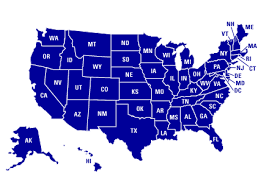
There are probably only a very few people who would know me well enough to know to what proportion of the United States I've been. Let me just say that it's quite sizable. I've actually been to forty out of the fifty States. For the five fourths of Americans who don't understand fractions, that's four fifths... but I digress. I've been thinking recently that I'd definitely like to visit the remaining ten States sometime relatively soon. The real issue here is exactly what I would do in the States which I haven't visited once I got there. A few of these states have some really sweet attractions... most of them, however are not all that noteworthy. Let's review the possibilities:
Hawaii-Not a problem in terms of attractions. As long as you have the money you'll never run out of things to do.
Alaska-Once again, not a problem. Plenty of things to do and see, especially when you consider that I'm part Alaskan Native.
Washington-I'd stick around Seattle, and I'd have a grand time. (I promise these get less entertaining)
Oregon-Not as much to do, but could go to the beach at the very least.
North Dakota-Maybe some duck hunting and seeing the geographical center of North America...that's about it.
Minnesota-I'd probably try to find someone who actually talks like a stereotypical Midwesterner, and video tape them next to a sign that says, "Welcome to Minnesota."
Wisconsin-Try some cheese... visit the Harley Plant... maybe...
Michigan-Go to Hell and take lots of pictures and buy souvenirs... then get the eph out.
Vermont-Acquire some maple syrup... visit Lake Champlain?
West Virginia-???
Hmm... now that I go over it in my mind these places sound a lot more entertaining than I originally figured. I definitely going to have to do these things when I go to these places.
Subscribe to:
Posts (Atom)